May 17, 2026

Best AI SEO Tools in 2026: Improve Rankings, Keywords, and Content Faster

best AI SEO tools

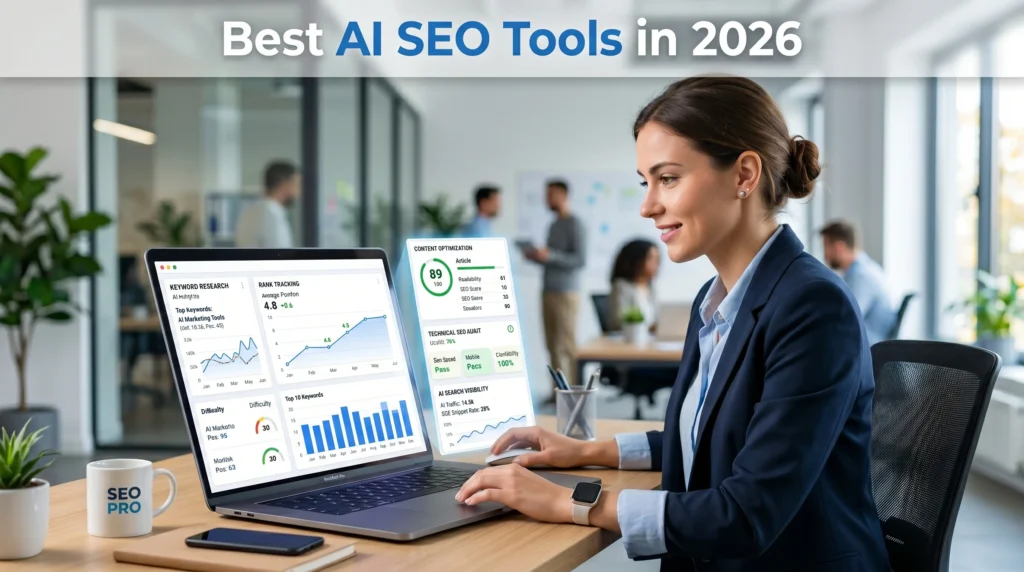
Best AI SEO tools are now becoming essential for bloggers, SEO experts, agencies, affiliate marketers, and business owners who want to improve Google rankings faster. In 2026, SEO is no longer only about adding keywords to an article. It is about understanding search intent, improving content quality, fixing technical issues, tracking rankings, and building trust with both users and search engines.

AI SEO tools can help with keyword research, content optimization, technical SEO, backlink analysis, rank tracking, content briefs, topic clustering, and even AI search visibility. But here is the important point: AI SEO tools do not replace real SEO strategy. They support it.

In my experience working on SEO content strategies, the biggest mistake beginners make is thinking that one tool can magically rank an article. That is not how SEO works. A tool can show you opportunities, but your content still needs helpful information, real examples, clean structure, strong internal links, and a reason for readers to trust you.

Google’s SEO Starter Guide explains that SEO helps search engines understand your content and helps users decide whether they should visit your site through search. That means the goal is not only to satisfy software. The goal is to make your content useful and easy to understand for real people.

In this guide, we will cover the best AI SEO tools in 2026, how they help with rankings, and which tool is best for different SEO tasks.

Table of Contents

What Are AI SEO Tools?

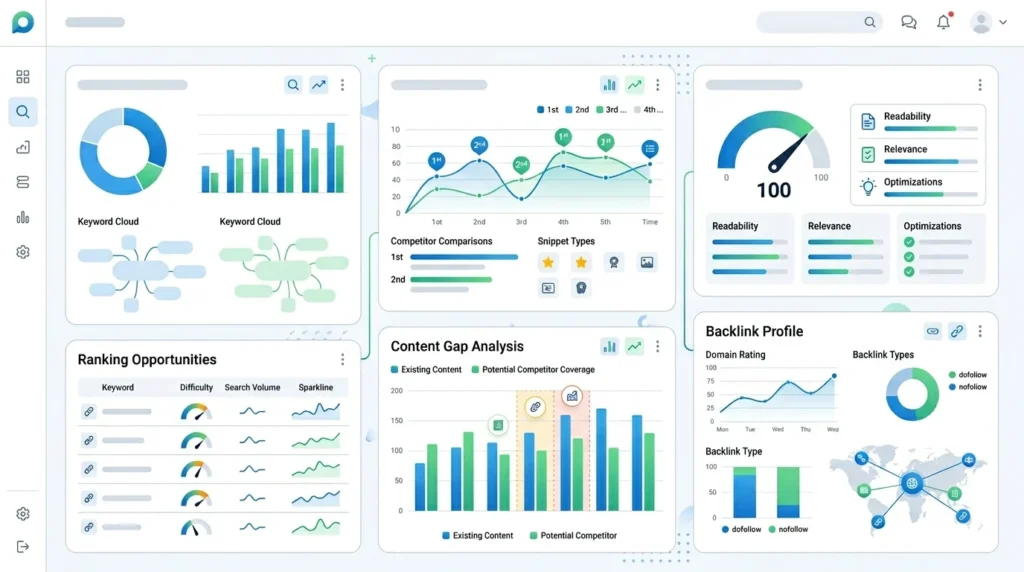
AI SEO tools for keyword research and content optimization
AI SEO tools combine search data, machine learning, and content insights to help marketers make better SEO decisions.

AI SEO tools are software platforms that use artificial intelligence, machine learning, natural language processing, search data, and automation to help improve website visibility in search engines.

These tools can help with:

  • keyword research
  • search intent analysis
  • content briefs
  • content optimization
  • technical SEO audits
  • internal linking
  • rank tracking
  • competitor analysis
  • backlink research
  • AI search visibility
  • content gap analysis
  • reporting

For example, instead of manually checking dozens of competitor pages, an AI SEO tool can analyze the top-ranking pages and suggest missing topics, related terms, headings, FAQs, and content structure.

But AI SEO tools should not be used blindly. A tool may suggest a keyword, but you still need to ask: Does this keyword match my audience? Can I write something better than the current ranking pages? Is the searcher looking for information, tools, reviews, or a purchase decision?

That human judgment is still important.

Why AI SEO Tools Matter in 2026

AI SEO tools matter in 2026 because search has become more competitive and more complex.

A few years ago, many websites could rank by writing basic articles with repeated keywords. That strategy is weak now. Google wants helpful, reliable, people-first content. Google’s helpful content guidance says its ranking systems are designed to prioritize content created to benefit people, not content created mainly to manipulate rankings.

This is exactly why AI SEO tools are useful. They can help you work faster, but you must still focus on quality.

AI SEO tools matter because they help you:

  • find better keywords
  • understand user intent
  • discover content gaps
  • optimize articles before publishing
  • improve old content
  • track keyword positions
  • monitor technical SEO issues
  • compare your content with competitors
  • create better topic clusters
  • prepare content for traditional Google Search and AI search platforms

Another major reason is the rise of AI search. Some modern SEO platforms now focus not only on Google rankings but also on visibility in AI systems like ChatGPT, Gemini, Perplexity, and Google AI Overviews. Surfer, for example, positions itself as a platform for visibility in Google, ChatGPT, Perplexity, Gemini, and beyond.

This does not mean traditional SEO is dead. It means SEO is expanding.


Best AI SEO Tools for Keyword Research

best AI SEO tools for keyword research
Keyword research tools help you find search terms with the right volume, difficulty, intent, and ranking potential.

Keyword research is still one of the most important parts of SEO. If you choose the wrong keyword, even a good article may fail.

A good keyword should have:

  • clear search intent
  • realistic competition
  • useful traffic potential
  • business relevance
  • topical connection to your website
  • enough content depth available
  • internal linking opportunity

Here are the best AI SEO tools for keyword research in 2026.

1. Semrush: Best Overall AI SEO Tool for Keyword Research

Semrush is one of the most complete SEO platforms for keyword research, competitor analysis, backlink research, rank tracking, and content planning.

Semrush’s keyword tools provide important keyword data such as monthly search volume, keyword difficulty, cost-per-click, competition level, intent, SERP features, and keyword variations.

Best For

  • keyword research
  • competitor analysis
  • content gap research
  • SEO reporting
  • rank tracking
  • backlink analysis
  • PPC keyword research
  • AI search visibility

Why I Recommend It

If you are serious about SEO, Semrush is one of the strongest all-in-one options. It is especially useful for content websites, agencies, and businesses that need data before writing articles.

For example, if you are writing an article about best AI SEO tools, Semrush can help you check keyword difficulty, related keywords, competitor pages, SERP intent, and content opportunities.

My Practical Opinion

Semrush is powerful, but beginners can feel overwhelmed. My advice is simple: do not open 20 features on day one. Start with Keyword Overview, Keyword Magic Tool, competitor research, and position tracking.

Use Semrush to decide what to write, then use your human expertise to decide how to make the article better than competitors.

2. Ahrefs: Best for Backlink Research and Competitive SEO

Ahrefs is another strong SEO platform. It is well known for backlink analysis, competitor research, keyword research, site audits, and rank tracking.

Ahrefs says its Webmaster Tools give access to Site Audit and Site Explorer, and its Site Audit scans websites for 170+ common technical and on-page SEO issues. Ahrefs also offers free SEO tools for keyword research, on-page SEO, link building, and more.

Best For

  • backlink analysis
  • competitor research
  • keyword research
  • site audits
  • content explorer research
  • rank tracking
  • finding low-competition topics

Why I Recommend It

Ahrefs is excellent when you want to understand why competitors are ranking. You can study their backlinks, top pages, organic keywords, and content strategy.

This is very useful if your website is new and you want to find low-competition keywords that still have ranking potential.

My Practical Opinion

For new bloggers, Ahrefs can help identify easy opportunities. But do not only copy competitor keywords. Look for weak competitor pages where you can create more helpful, updated, and better-structured content.


3. Google Search Console: Best Free SEO Performance Tool

Google Search Console is not usually called an AI SEO tool, but it is still one of the most important SEO tools you should use. It shows how your website performs in Google Search.

Best For

  • checking indexed pages
  • finding search queries
  • monitoring impressions and clicks
  • identifying ranking pages
  • checking indexing issues
  • submitting sitemaps
  • tracking page experience signals

Why I Recommend It

For your website, Google Search Console is not optional. It tells you what Google is actually seeing.

Many beginners use paid SEO tools but ignore Search Console. That is a mistake. Search Console shows real performance data from your own website.

My Practical Opinion

Use Google Search Console every week. Look for pages with high impressions but low clicks. These pages may need better SEO titles and meta descriptions.

Also check pages ranking in positions 8–20. These are often the fastest pages to improve because they are already close to page one.

Best AI SEO Tools for Content Optimization

AI SEO content optimization tools
Content optimization tools help improve headings, readability, topic coverage, internal links, and search intent alignment.

Content optimization tools help you improve your articles before publishing.

They can suggest:

  • related keywords
  • missing topics
  • content structure
  • headings
  • readability improvements
  • internal links
  • competitor comparison
  • FAQs
  • ideal content depth

However, content optimization is not the same as keyword stuffing. Never add terms only because a tool suggests them. Add information only when it helps the reader.


4. Surfer SEO: Best AI SEO Tool for On-Page Content Optimization

Surfer SEO is one of the most popular tools for content optimization. It analyzes top-ranking pages and gives recommendations for content structure, keywords, headings, and topic coverage.

Surfer describes itself as an SEO content optimization platform that helps improve visibility in Google, ChatGPT, Perplexity, Gemini, and beyond.

Best For

  • content optimization
  • on-page SEO
  • content briefs
  • SERP analysis
  • AI-assisted article planning
  • content audits
  • improving existing articles

Why I Recommend It

Surfer SEO is useful when you already have a target keyword and want to create a better article. It helps you compare your draft with top-ranking pages and identify content gaps.

My Practical Opinion

Surfer SEO is helpful, but do not follow the score blindly. A high content score does not guarantee rankings. You still need unique examples, clear writing, helpful structure, real expertise, and strong internal links.

Use Surfer as a guide, not as your final editor.


5. Clearscope: Best for High-Quality SEO Content Teams

Clearscope is a content optimization platform designed to improve discoverability in Google and AI search. It focuses on topic relevance, search intent, content quality, and content optimization.

Clearscope describes itself as a discoverability platform for a new era in search, helping improve and monitor visibility in Google, ChatGPT, and beyond.

Best For

  • professional content teams
  • agencies
  • enterprise SEO
  • content optimization
  • topic coverage
  • editorial workflows
  • AI search visibility

Why I Recommend It

Clearscope is useful for teams that care deeply about content quality. It gives writers and editors a structured way to improve content without making the article feel messy.

My Practical Opinion

Clearscope is better for serious content teams than casual bloggers. If your site is still small, you may not need it immediately. But if you are producing many articles every month, it can improve consistency and editorial quality.


6. Frase: Best for AI Content Briefs and Research

Frase is useful for creating content briefs, analyzing SERPs, and preparing article outlines. It helps writers understand what competitors are covering and what questions readers are asking.

Best For

  • content briefs
  • SERP research
  • question research
  • outline creation
  • content planning
  • blog writing workflows

Why I Recommend It

Frase is helpful when you want to move from keyword to article structure quickly. It can save time during research and briefing.

My Practical Opinion

Frase is especially good for bloggers and small teams. But like all AI content tools, it should not replace your personal experience. Use it to prepare the structure, then add your own examples and insights.


Will Digital Marketing Be Replaced by AI?


Best AI SEO Tools for Technical SEO

Technical SEO is the foundation of website performance. If your website has serious crawl, indexing, redirect, speed, or noindex problems, content alone may not help.

Technical SEO tools help find issues such as:

  • broken links
  • missing title tags
  • duplicate meta descriptions
  • noindex pages
  • redirect chains
  • crawl errors
  • slow pages
  • missing alt text
  • sitemap problems
  • canonical tag issues
  • structured data errors

7. Screaming Frog SEO Spider: Best for Technical SEO Audits

Screaming Frog SEO Spider is one of the best tools for technical SEO audits. It crawls websites and helps find technical issues that may affect search performance.

Best For

  • technical SEO audits
  • broken link checking
  • metadata analysis
  • redirect checks
  • canonical tag review
  • duplicate content checks
  • crawl diagnostics
  • large website audits

Why I Recommend It

If you are serious about SEO, you need a crawler. Screaming Frog helps you see your website the way a crawler sees it.

This is especially useful when your website has indexing problems, old pages, noindex tags, theme leftovers, redirect issues, or duplicate pages.

My Practical Opinion

For WordPress sites, Screaming Frog is extremely useful. You can quickly check whether pages are indexable, whether titles are missing, whether meta descriptions are duplicated, and whether unwanted URLs are still crawlable.

For your website, this kind of tool is important because you have previously dealt with noindex and sitemap issues. A crawler helps confirm what is actually happening.


8. Ahrefs Site Audit: Best for Technical SEO + On-Page Issues

Ahrefs Site Audit crawls your website and flags technical and on-page SEO issues. Ahrefs says its Site Audit identifies issues, gives recommendations, visualizes key data, and provides an SEO health score.

Best For

  • site health monitoring
  • technical SEO
  • on-page SEO issues
  • internal link problems
  • performance checks
  • crawlability analysis

Why I Recommend It

Ahrefs Site Audit is useful because it combines technical SEO with broader SEO data. You can see issues and understand how they may affect your site performance.

My Practical Opinion

Use Ahrefs Site Audit monthly. For a small website, weekly technical audits may be too much. But monthly audits can help catch problems before they become serious.

Best AI SEO Tools for Rank Tracking

Rank tracking tools help you monitor whether your SEO work is improving rankings.

You should track:

  • target keywords
  • current position
  • ranking changes
  • top-performing pages
  • competitor movement
  • search volume
  • country/location
  • device type
  • SERP features

Rank tracking is important because SEO takes time. Without tracking, you are only guessing.


9. Semrush Position Tracking: Best for Agencies and SEO Campaigns

Semrush Position Tracking helps monitor keyword rankings over time. It is useful for agencies, businesses, and bloggers who want to track SEO campaigns.

Best For

  • keyword position tracking
  • local rank tracking
  • competitor rank comparison
  • campaign reporting
  • visibility monitoring

My Practical Opinion

Rank tracking should not be checked emotionally every day. Rankings move. Instead, check trends weekly or monthly.

If your page is slowly moving from position 40 to 25 to 14, that is progress. You may need better internal links, improved content, or more backlinks to reach page one.


10. SE Ranking: Best Budget-Friendly Rank Tracking Tool

SE Ranking is a good option for rank tracking, keyword research, site audits, and competitor tracking. It is often more affordable than bigger SEO suites.

Best For

  • small businesses
  • freelancers
  • bloggers
  • rank tracking
  • competitor tracking
  • site audits

My Practical Opinion

If you cannot afford Semrush or Ahrefs, SE Ranking can be a practical choice. For many small websites, the most important thing is consistent tracking, not buying the most expensive tool.


Best AI SEO Tools for Beginners

If you are a beginner, do not start with too many tools. Too many dashboards can confuse you.

A simple beginner SEO stack:

  1. Google Search Console
  2. Google Analytics
  3. Ahrefs Free Tools or Semrush free tools
  4. ChatGPT for outlines and content ideas
  5. Surfer SEO or Frase for content optimization
  6. Screaming Frog free version for small technical audits

This is enough to start.

My Beginner Recommendation

If you are just starting, use this workflow:

  1. Find keyword ideas using Semrush or Ahrefs free tools
  2. Check your site data in Google Search Console
  3. Create an outline with ChatGPT
  4. Optimize the article with Surfer or Frase
  5. Add internal links manually
  6. Publish with proper title, meta, slug, and images
  7. Track performance after indexing

This is a simple but strong SEO process.


Best AI SEO Tools for Agencies

Agencies need tools that can handle multiple clients, reports, audits, keyword tracking, content workflows, and competitor analysis.

Best agency tools:

  • Semrush
  • Ahrefs
  • Surfer SEO
  • Clearscope
  • Screaming Frog
  • Google Search Console
  • Looker Studio
  • SE Ranking

My Agency Recommendation

For agencies, I recommend using:

  • Semrush or Ahrefs for research and reporting
  • Screaming Frog for technical audits
  • Surfer SEO or Clearscope for content optimization
  • Google Search Console for real client data
  • Looker Studio for dashboards

This gives a complete workflow from research to reporting.

Best AI SEO Tools for Bloggers

Bloggers need tools that help them find low-competition keywords, write better content, and improve old articles.

Best blogger tools:

  • Google Search Console
  • Ahrefs Free Tools
  • Semrush Keyword Magic Tool
  • Frase
  • Surfer SEO
  • ChatGPT
  • Rank Math SEO

My Blogger Recommendation

For bloggers, the most important skill is not buying tools. It is choosing topics wisely.

A blogger should focus on:

  • low-competition keywords
  • long-tail keywords
  • clear search intent
  • internal links
  • helpful examples
  • content updates
  • readable writing

Tools help, but the strategy matters more.


Can AI SEO Tools Replace SEO Experts?

AI SEO tools cannot fully replace SEO experts.

They can replace some repetitive SEO tasks, such as:

  • keyword clustering
  • first-draft content briefs
  • basic metadata suggestions
  • reporting summaries
  • simple content audits
  • technical issue detection

But they cannot fully replace:

  • SEO strategy
  • content judgment
  • brand understanding
  • competitor interpretation
  • link-building strategy
  • technical decision-making
  • experience-based recommendations
  • client communication
  • business understanding

For example, an AI tool can tell you that a keyword has search volume. But an SEO expert can tell you whether that keyword is worth targeting for your business.

A tool can say your article needs more words. An expert can say your article needs better examples, stronger structure, and clearer intent.

That is the difference.

How to Choose the Best AI SEO Tool

Before choosing a tool, ask yourself what problem you are trying to solve.

Choose Semrush if:

You want an all-in-one SEO platform for keyword research, competitor analysis, rank tracking, backlink research, and reporting.

Choose Ahrefs if:

You care about backlinks, competitor research, keyword opportunities, and technical audits.

Choose Surfer SEO if:

You want to optimize articles based on SERP data and improve on-page SEO.

Choose Clearscope if:

You have a professional content team and want strong content optimization workflows.

Choose Screaming Frog if:

You need technical SEO audits, crawl analysis, and indexing checks.

Choose Google Search Console if:

You want free real data from Google about your website’s performance.

Choose Frase if:

You want fast content briefs, outlines, and SERP research.

My Recommended AI SEO Tool Stack for 2026

If I had to build a practical AI SEO stack for a content website in 2026, I would choose:

For BeginnersFor BloggersFor AgenciesFor Technical SEOFor Content Teams
Google Search ConsoleGoogle Search ConsoleSemrushScreaming FrogClearscope
Rank Math SEOSemrush or AhrefsAhrefsAhrefs Site AuditSurfer SEO
ChatGPTSurfer SEO or FraseScreaming FrogGoogle Search ConsoleFrase
Ahrefs Free ToolsRank Math SEOSurfer SEOPageSpeed InsightsChatGPT
Screaming Frog Free VersionChatGPTClearscopeGoogle Docs or WordPress
Looker Studio
Google Search Console

Common Mistakes to Avoid When Using AI SEO Tools

1. Depending Only on AI

AI can help, but it should not make every decision for you.

2. Publishing AI Drafts Without Editing

This is one of the biggest mistakes. Always edit, fact-check, and add experience.

3. Keyword Stuffing

Do not repeat keywords unnaturally. Use your focus keyword naturally.

4. Ignoring Search Intent

A keyword is useless if your article does not answer what the searcher actually wants.

5. Ignoring Technical SEO

If your page is noindexed, blocked, slow, or missing from the sitemap, content optimization will not fix everything.

6. Not Updating Old Content

SEO is not publish-and-forget. Update your articles regularly.

7. Using Too Many Tools

Too many tools can create confusion. Build a simple workflow first.


E-E-A-T Tips for AI SEO Content

If you are writing articles using AI SEO tools, follow E-E-A-T principles.

Experience

Add your own observations, tests, examples, screenshots, and practical notes.

Example:

“In my experience, Surfer SEO is useful for improving topic coverage, but I never publish only because the score is high. I still check search intent manually.”

Expertise

Explain why a tool is useful, who should use it, and when it is not needed.

Authoritativeness

Link to trusted sources like Google Search Central, Semrush, Ahrefs, Surfer, Clearscope, and Google Search Console.

Trustworthiness

Avoid fake promises like:

  • guaranteed Google ranking
  • rank number one overnight
  • one-click SEO success
  • AI tool replaces all SEO experts
  • instant traffic without strategy

Google’s guidance around AI-generated content emphasizes quality, helpfulness, reliability, and the “Who, How, and Why” behind content production

Best AI SEO Tools Comparison Table

ToolBest ForBeginner FriendlyMain Use
SemrushAll-in-one SEOMediumKeywords, competitors, ranking, reports
AhrefsBacklinks and competitor SEOMediumBacklinks, keywords, audits
Google Search ConsoleFree site performance dataYesIndexing, queries, clicks, impressions
Surfer SEOContent optimizationYesOn-page SEO, content scoring
ClearscopeProfessional content teamsMediumContent quality and topic coverage
FraseContent briefsYesOutlines and SERP research
Screaming FrogTechnical SEOMedium/AdvancedCrawling and technical audits
SE RankingBudget rank trackingYesRankings, audits, competitors
Rank Math SEOWordPress SEOYesOn-page SEO setup
ChatGPTIdeation and draftsYesOutlines, briefs, research support

Final Verdict: Which AI SEO Tool Should You Use?

The best AI SEO tool depends on your goal.

If you want one powerful all-in-one tool, choose Semrush.
If you care most about backlinks and competitor research, choose Ahrefs.
If you want to improve article quality, choose Surfer SEO or Clearscope.
If you need technical SEO audits, choose Screaming Frog.
If you want free real website data, use Google Search Console.
If you are a beginner, start with Google Search Console, Rank Math, ChatGPT, and free keyword tools before spending money.

My honest opinion is this: the best AI SEO tools will not save weak content. But they can make a good SEO strategy much faster and more accurate.

In 2026, SEO is not about tricking Google. It is about helping users, proving expertise, improving content quality, fixing technical problems, and building trust. AI SEO tools help with this process, but the final strategy still needs a human.

FAQ

What are the best AI SEO tools in 2026?

The best AI SEO tools in 2026 include Semrush, Ahrefs, Surfer SEO, Clearscope, Frase, Screaming Frog, Google Search Console, SE Ranking, Rank Math, and ChatGPT.

Are AI SEO tools good for beginners?

Yes, AI SEO tools can help beginners with keyword research, content outlines, optimization, and technical checks. Beginners should start with Google Search Console, Rank Math, ChatGPT, and free keyword tools before buying expensive platforms.

Can AI SEO tools replace SEO experts?

No, AI SEO tools cannot fully replace SEO experts. They can automate repetitive tasks, but SEO strategy, content judgment, technical decisions, and business understanding still need human expertise.

About The Author

Leave a Reply

Your email address will not be published. Required fields are marked *