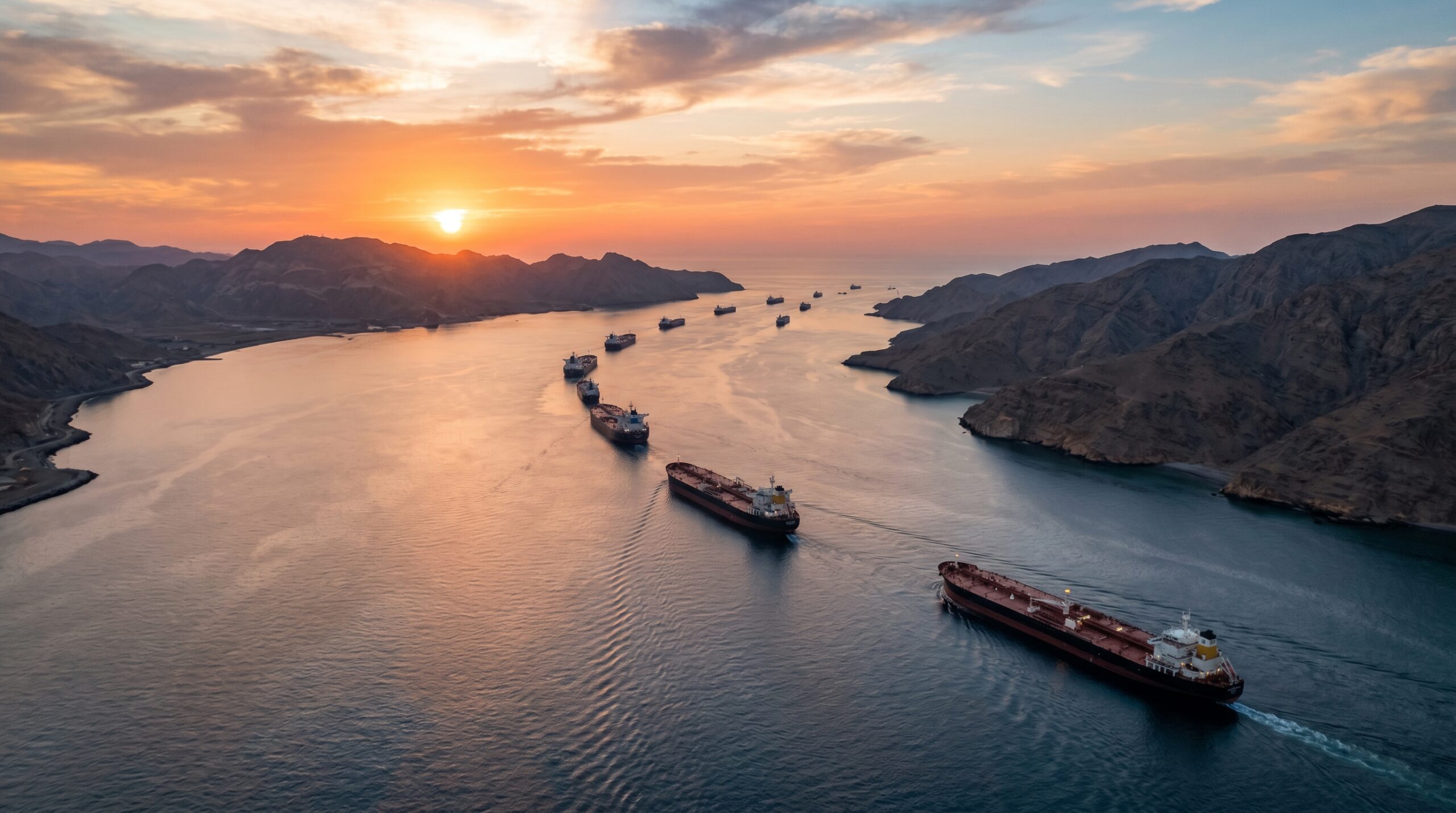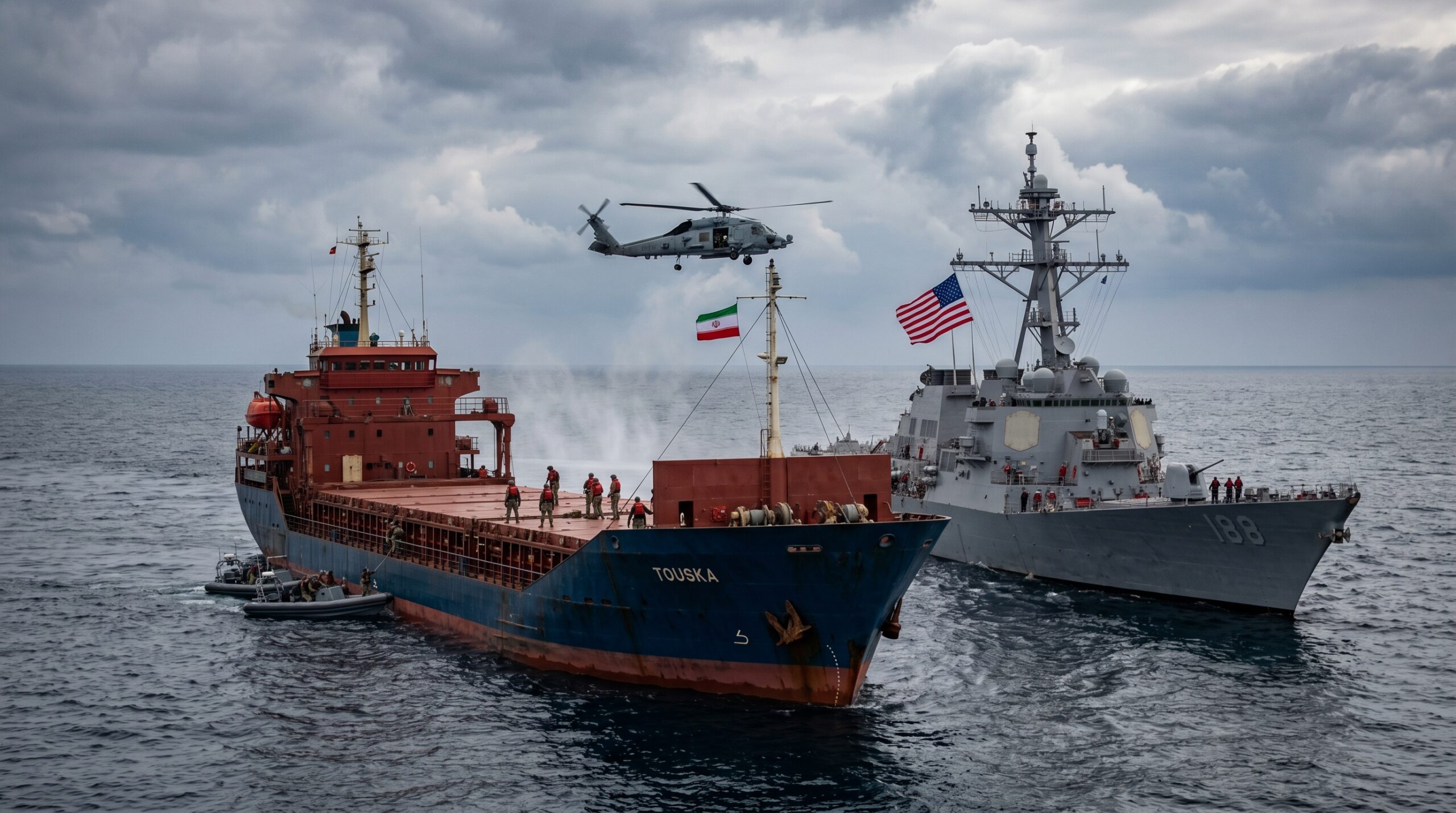
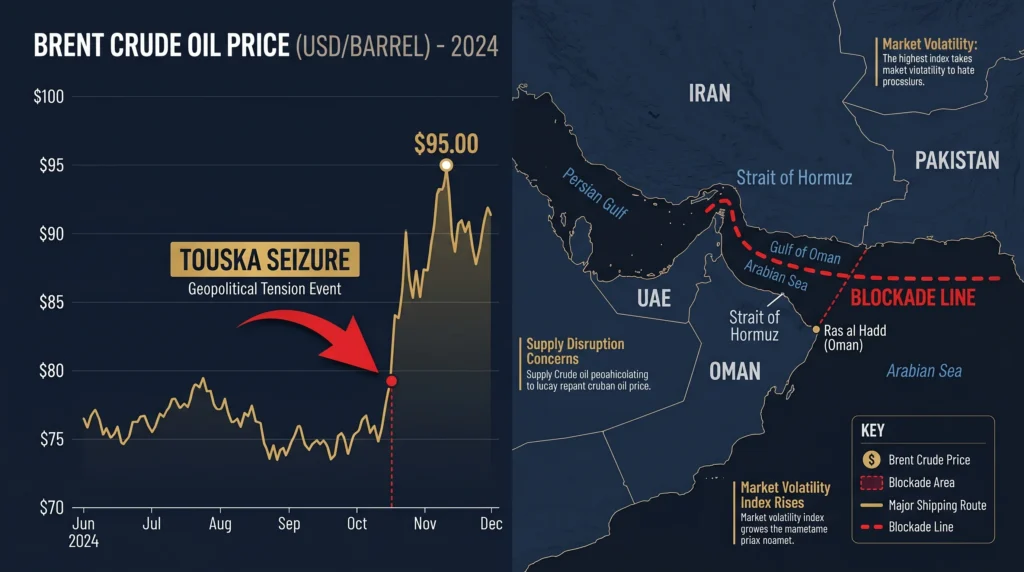
The Touska, an Iranian-flagged bulk carrier stretching nearly 900 feet and displacing weight comparable to a Nimitz-class aircraft carrier attempted to breach the US naval blockade line running diagonally from Ras al Hadd, Oman, to the Iran-Pakistan maritime border.
After the vessel’s captain repeatedly ignored orders to heave to, USS Spruance fired a precision strike on the engine room, disabling the ship without sinking it. An elite team of US Marines then boarded the Touska and took full custody of the vessel and its crew. The entire operation was confirmed by US Central Command within hours, alongside footage released on social media.
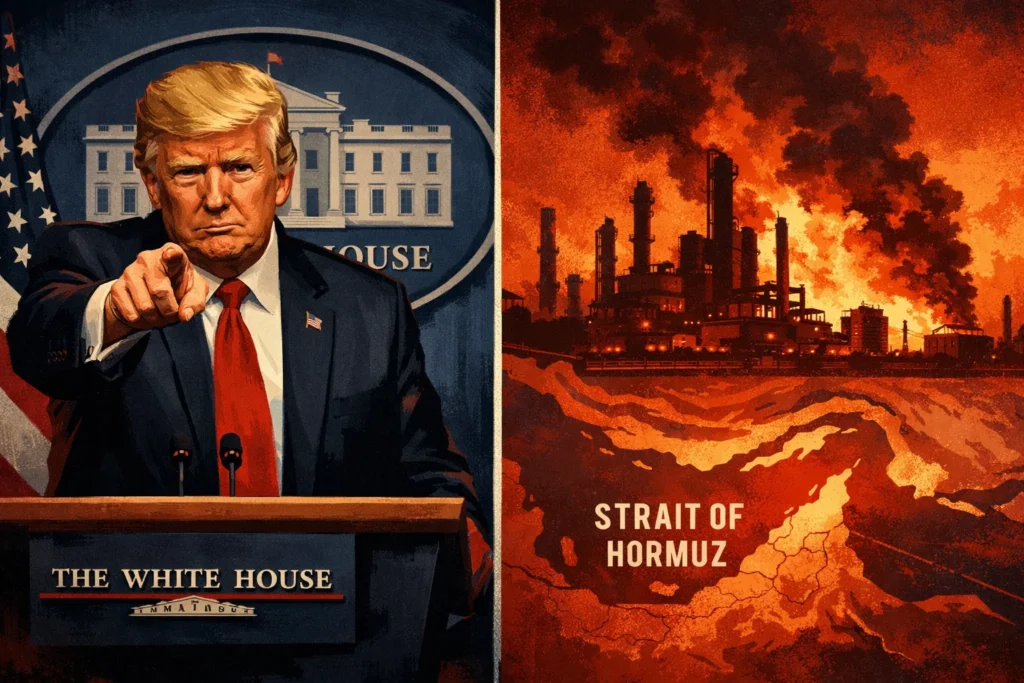
President Trump described the seizure on Truth Social: the Touska had tried to push past the naval blockade, and “it did not go well for them.” This bold move signals Washington’s shift from maritime surveillance to physical asset seizure, a qualitative escalation with no modern precedent.
Why the US Seizes Iranian Cargo Ship Touska Now: The Blockade Context
The operation represents the first seizure in the US Strait of Hormuz blockade, which formally began earlier this month. Washington’s strategy has moved in clear stages: first, a monitored exclusion zone; then warning shots; and now the boarding and confiscation of Iranian commercial assets.
What makes this moment even more alarming is a classified revelation: Iran has reportedly lost track of the sea mines it planted in the Strait. Even if diplomacy produces a deal by Wednesday’s deadline, the waterway cannot be reopened immediately because the coordinates for those mines are missing leaving the US Navy responsible for mapping and clearing an unmapped minefield in contested waters.
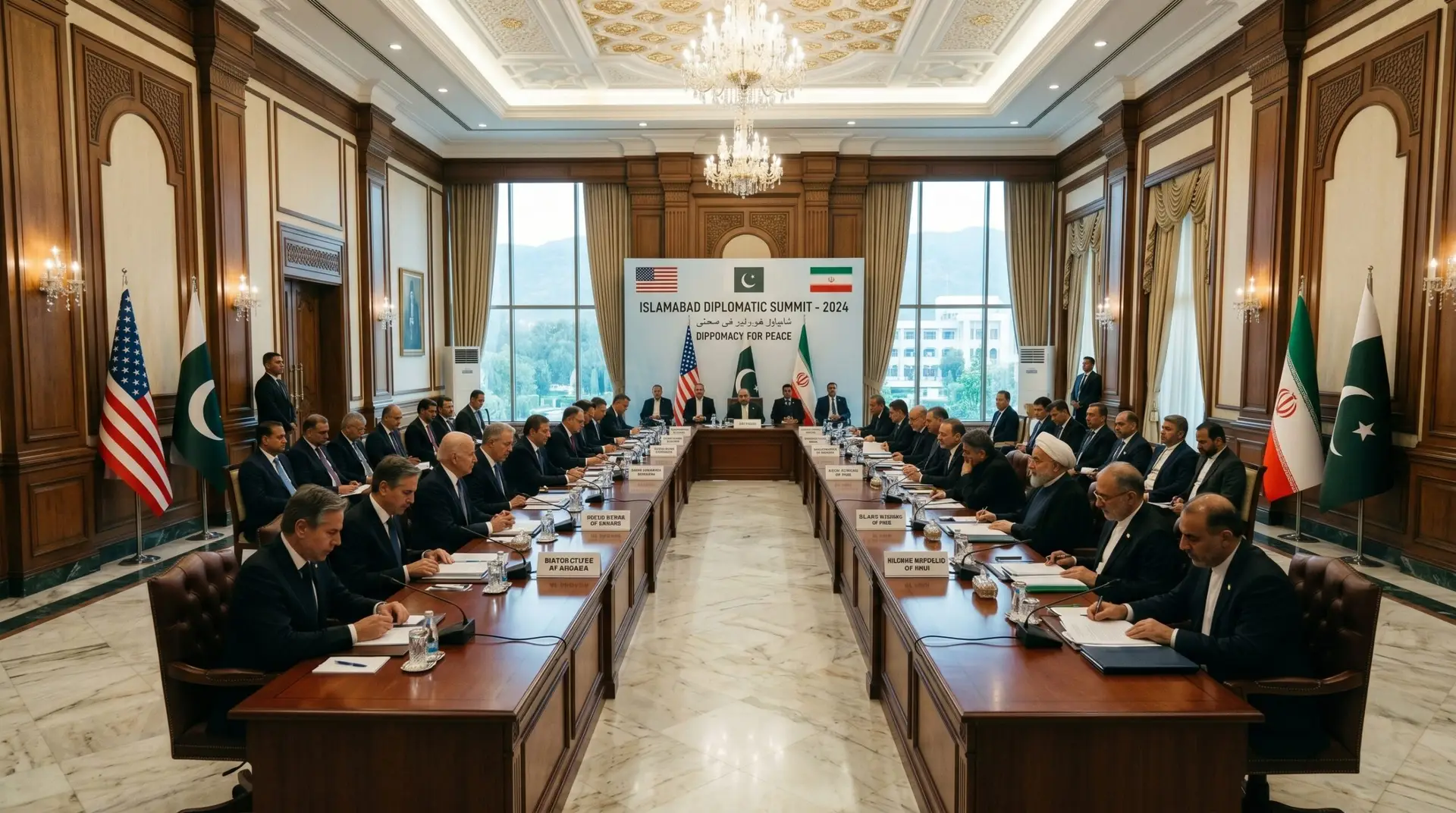
For a full timeline of the US-Iran Talks, see our earlier report: US Iran Talks Islamabad: Why the First Round Failed and What Comes Next
Trump’s Ultimatum and the Tuesday Deadline
The Touska ship seized by US Navy is not an isolated event it is part of a broader coercive strategy that includes Trump’s “Tuesday” infrastructure ultimatum. The President has threatened to demolish Iranian bridges, power plants, and desalination facilities unless Tehran agrees to a comprehensive nuclear deal. The phrase Trump used “a whole civilization will die” is the most explicit threat of civilizational destruction issued by a sitting US president in modern history.
Legal scholars are divided. Some argue that deliberately targeting civilian infrastructure constitutes a war crime under international humanitarian law; the administration counters that the targets are dual-use military and energy assets. Regardless, the ultimatum has rattled global bond markets and accelerated emergency sessions at the UN Security Council.
Bizarrely, the White House simultaneously offered to help “rebuild” Iran after any conflict, a psychological warfare tactic designed to make resistance feel futile while leaving a diplomatic offramp open.
Iran Vows Response to US Ship Seizure 2026: Diplomacy on a Knife’s Edge
Tehran’s formal response was swift: Iran vows retaliation for the Touska seizure, calling it “maritime piracy” and demanding an emergency session of the UN Security Council. Supreme Leader Khamenei’s office issued a statement warning of “asymmetric responses at the time and place of our choosing” language that Iran watchers interpret as a reference to cyber attacks on Gulf energy infrastructure and possible Houthi escalation in the Red Sea.
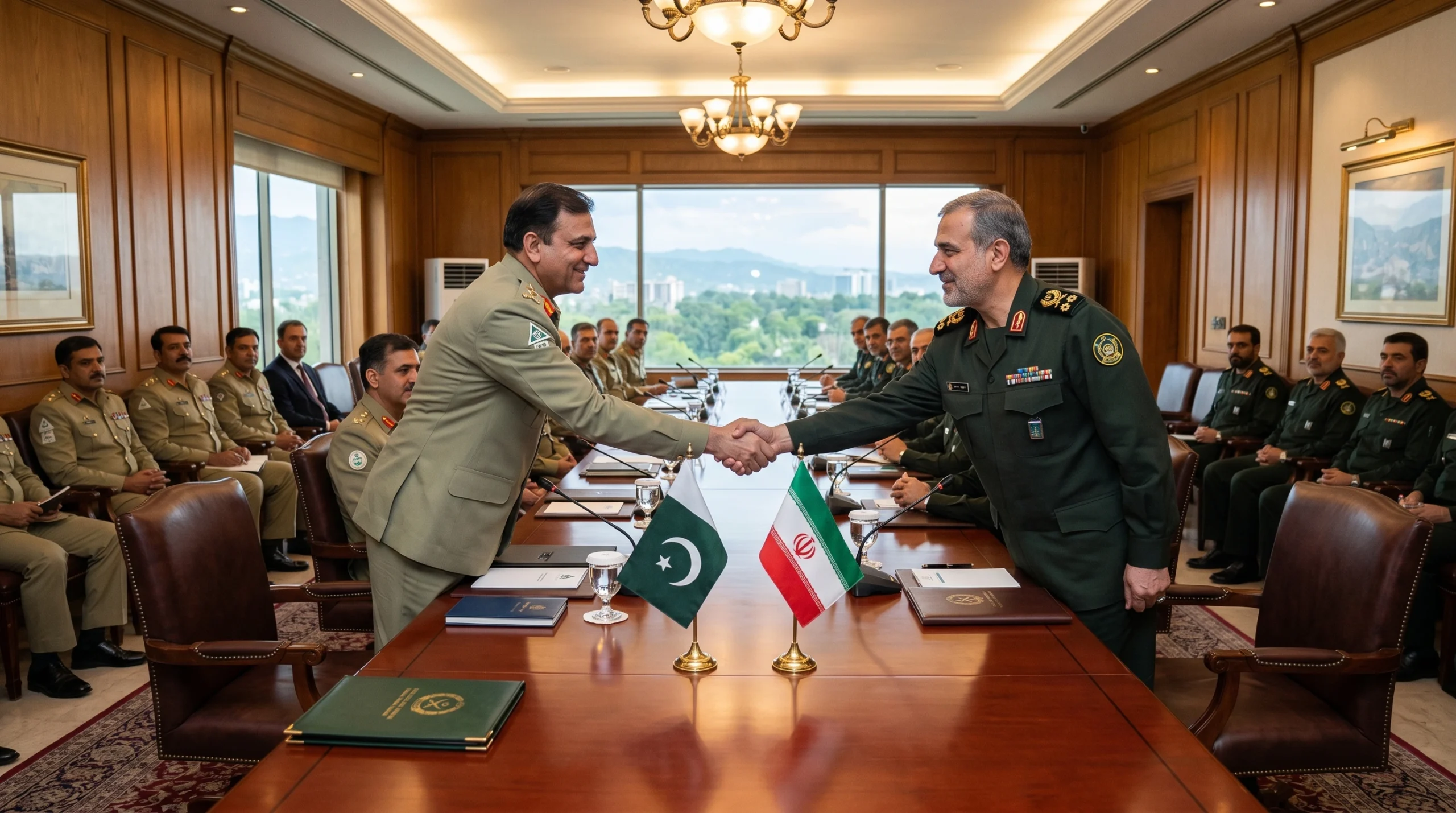
Pakistan’s army chief, General Asim Munir, is attempting to hold the Islamabad Accord together despite this new flashpoint. The central sticking point remains nuclear enrichment: the US demands a 20-year pause; Iran is offering 3–5 years. The gap is enormous, and the Touska incident has hardened positions on both sides ahead of the second round of negotiations.
For more on the peace talks, read: Asim Munir Shuttle Diplomacy US Iran Deal: Pakistan’s Role in the $20 Billion Agreement and Strait of Hormuz Reopening
Oil Prices Rise After Touska Seizure: The Global Economic Fallout
Markets reacted immediately. Brent Crude surged past $95 per barrel within hours of the Touska seizure news breaking a 6% single-day spike that sent shockwaves through aviation, shipping, and agricultural commodity markets. The Iran-controlled shadow toll agency, the so-called “Strait of Hormuz Traffic Licensing Committee,” had attempted to charge tankers $2 million per passage but collected zero payments due to internal mismanagement, deepening Tehran’s fiscal crisis.
Economists estimate the blockade is costing Iran approximately $435 million per day in lost export revenue. The ripple effects are now reaching American consumers: fertilizer prices heavily dependent on natural gas transiting the region are rising, threatening to push up food costs in the coming months. According to Reuters, energy traders are pricing in a “prolonged kinetic phase” with no clear resolution before Q3 2026.
US Central Command’s official statement on the Touska operation, available via CENTCOM.mil, confirms the vessel’s size, the method of interdiction, and the current status of its crew who are being held aboard a US Navy support vessel pending further diplomatic developments.
Conclusion: A Line Has Been Crossed
When the US seizes Iranian cargo ship Touska, it isn’t just a naval headline it is a line drawn in the water that cannot be undrawn and will again push the world to world war 3 because America don’t care about others. The era of shadow diplomacy and implied threats is over. Washington has demonstrated it will use kinetic force to enforce economic attrition, and Tehran has responded with vows of retaliation that carry real credibility.
With unmapped mines in the Strait, oil above $95 a barrel, a Wednesday deadline approaching, and nuclear talks stalled over a 15-year gap in enrichment proposals, the world is watching one of the most dangerous geopolitical standoffs since the Cuban Missile Crisis. Stay with us for live updates as this story develops.