Artemis II Earth Day images are stopping people in their tracks and for good reason.
For the first time since 1972, human eyes looked back at a fully rotating, fully illuminated Earth from beyond Low Earth Orbit. And this time, they had cameras capable of capturing what Apollo astronauts could only describe in words. Released in honor of Earth Day on April 22, 2026, these photographs are already being compared to the most iconic space images in history.
Here is everything you need to know about these extraordinary photos, the crew behind them, and why they matter.
What Are the Artemis II Earth Day Images?
The Artemis II Earth Day images are a series of high-resolution photographs taken by the four-person crew of NASA’s Artemis II mission during their ten-day lunar flyby, which launched on April 1, 2026. NASA officially released the most striking of these images on April 22 to coincide with Earth Day, a deliberate and powerful choice.
Unlike archival satellite photography, these images were captured by human hands at a distance of up to 252,756 miles (406,771 km) from Earth the farthest any human being has traveled from our planet since Apollo 13 in 1970.
They are not just photographs. They are proof of concept: humanity can go back, and when it does, it brings perspective.
The Crew That Changed the View Forever
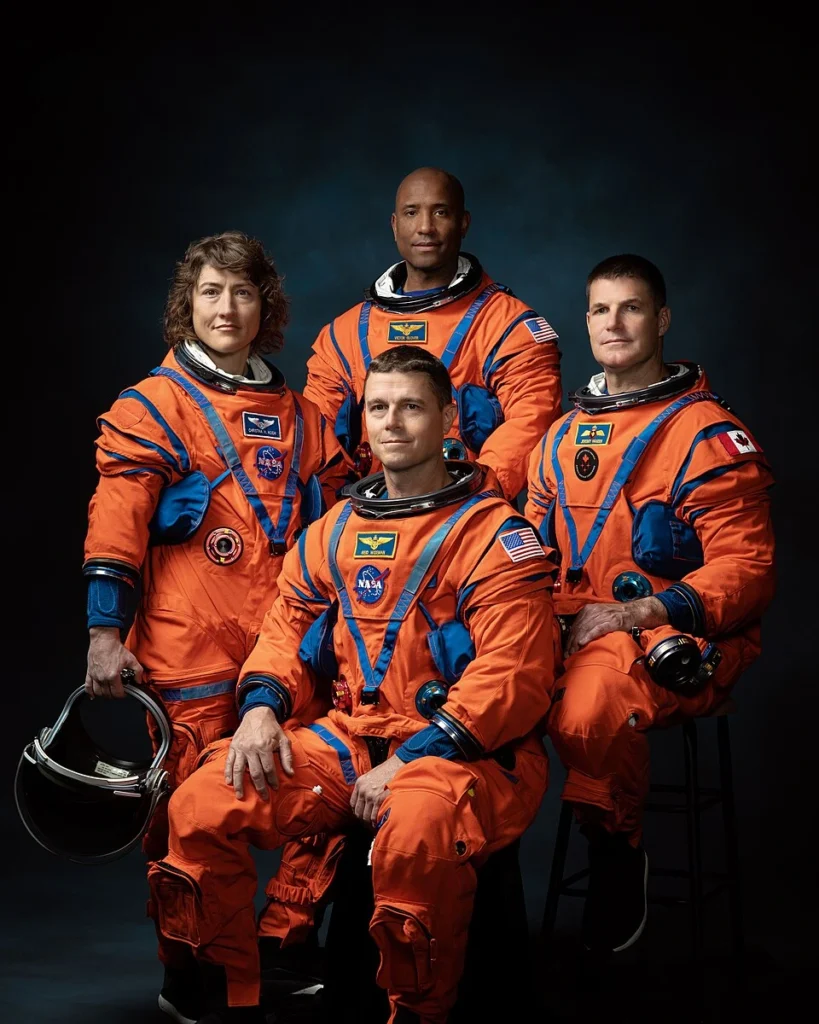
The four astronauts behind the Artemis II Earth Day images represent the most diverse deep-space crew in history. Commander Reid Wiseman became the oldest person to travel beyond Low Earth Orbit. Pilot Victor Glover was the first person of color to do so. Mission Specialist Christina Koch became the first woman to venture into the lunar environment. And Canadian astronaut Jeremy Hansen was the first non-American to reach lunar distance.
Each of these firsts mattered inside the capsule but they mattered even more through the lens.
When Wiseman photographed Earth from 250,000 miles away, he wasn’t just an astronaut. He was a representative of every human being who has ever looked up and wondered.
Breaking the Distance Record And the Camera Roll
At 17:56 UTC on April 6, 2026, Artemis II officially surpassed the 54-year-old distance record set by Apollo 13. At their farthest point, the crew was 252,756 miles from home completely isolated, completely alive, and completely documenting it.
Space-Based Data Centers in 2026: India’s Semiconductor Boom Powers the Orbital AI Revolution
This is where the Artemis II Earth Day images were born. Shot from a distance that makes the entire Earth visible as a single luminous sphere, these photos share something no satellite can offer: the knowledge that a human being was looking through that viewfinder.
5 Stunning Artemis II Earth Day Images Explained
These are the five images from the Artemis II collection that have resonated most powerfully since their Earth Day release:
1) The Moonglow Earth
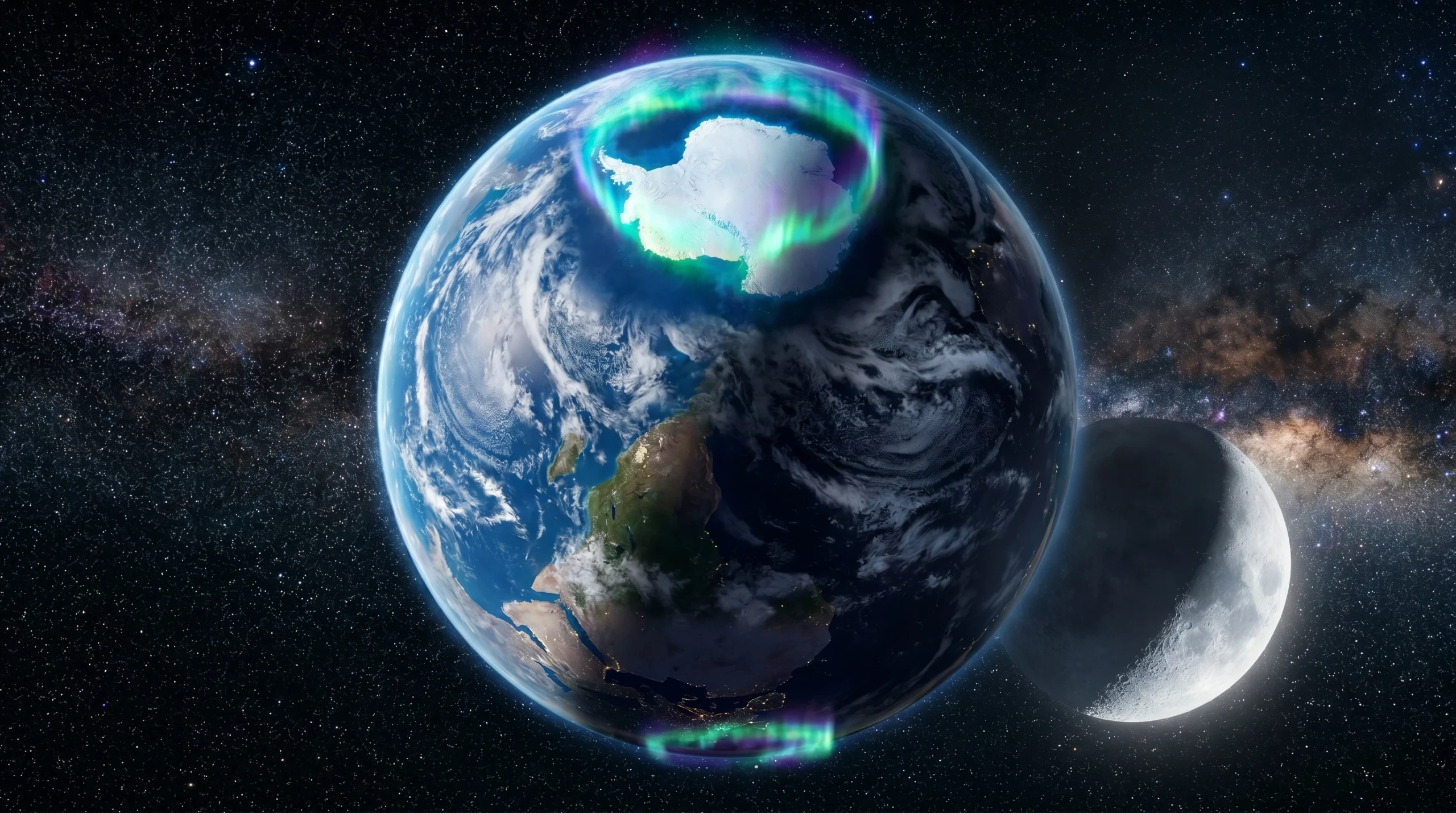
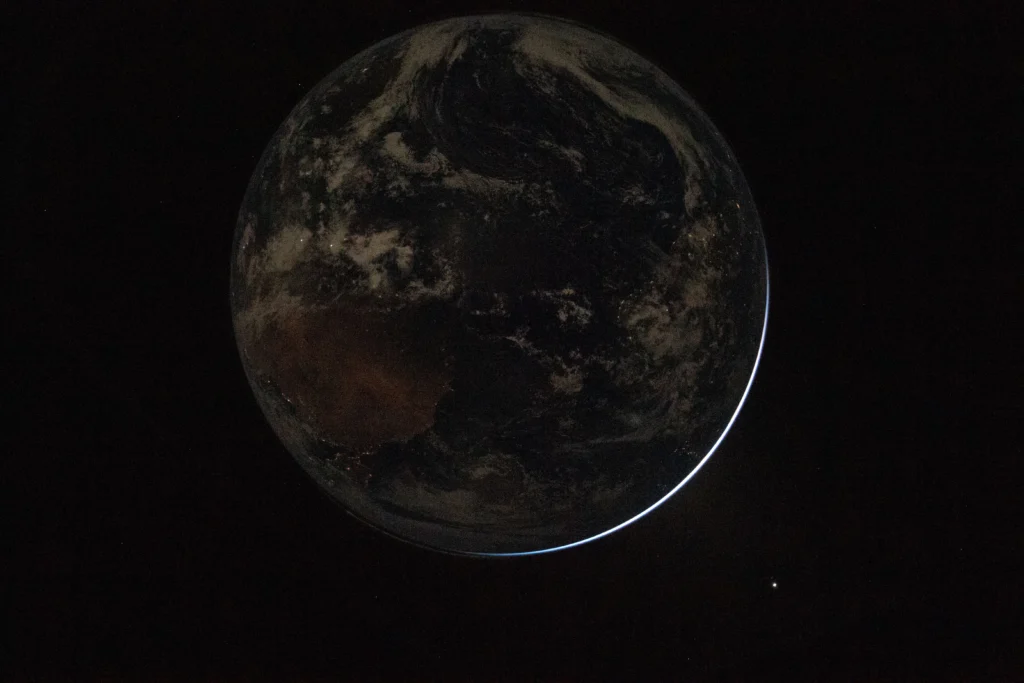
Captured on April 2 by Commander Wiseman, this image shows Earth’s nightside illuminated by reflected moonlight. The aurora at both poles is faintly visible, along with the zodiacal light sunlight scattered by interplanetary dust that no Apollo crew ever photographed. The South Pole faces upward, deliberately challenging our terrestrial perspective.
2) The Full Disk
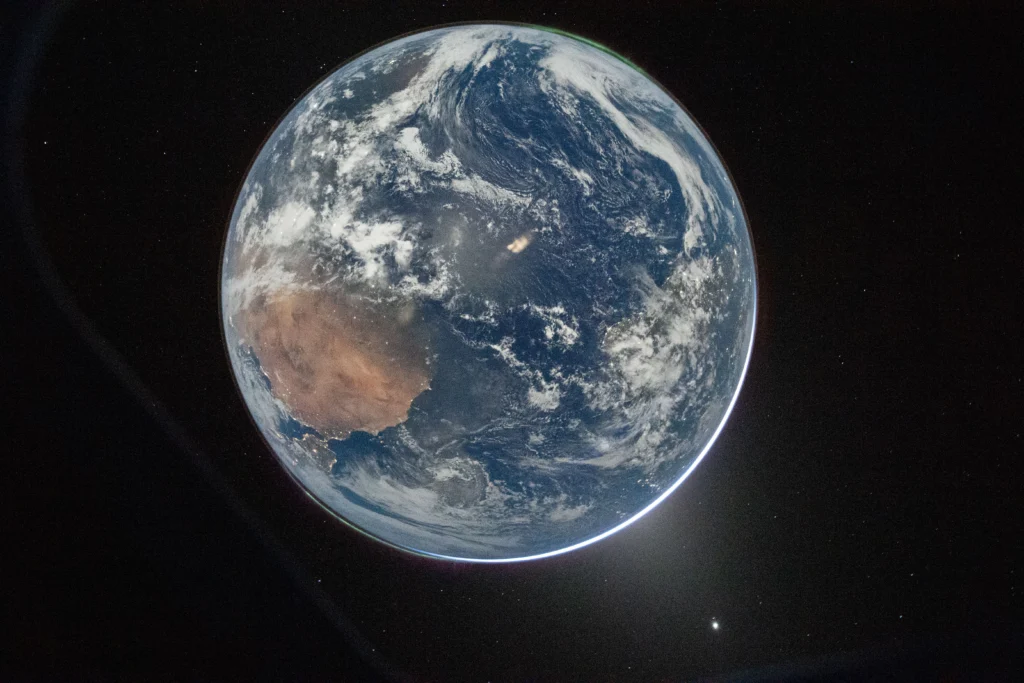
A successor to the 1972 “Blue Marble” from Apollo 17, this wide-angle shot shows the complete globe from pole to pole: Africa, Europe, and swirling cloud systems covering the Indian Ocean.
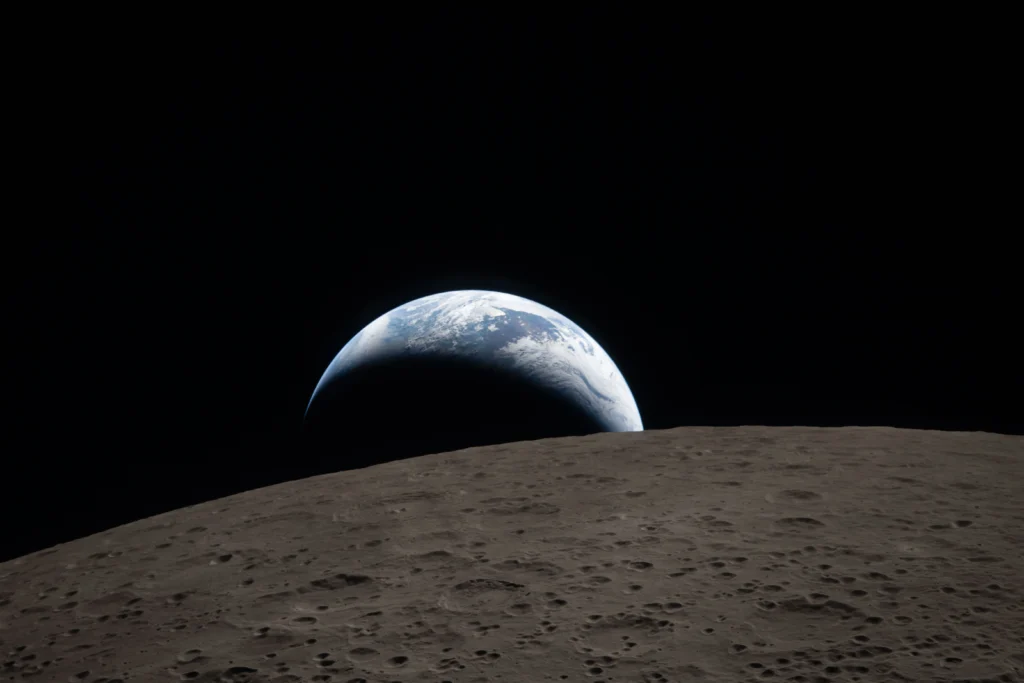
3) The Earthset Sequence
Taken as the Orion capsule swung behind the Moon, this series of frames captures Earth “setting” below the lunar horizon, a mirror image of the famous Earthrise photo from Apollo 8, but with modern resolution and a crewed perspective.
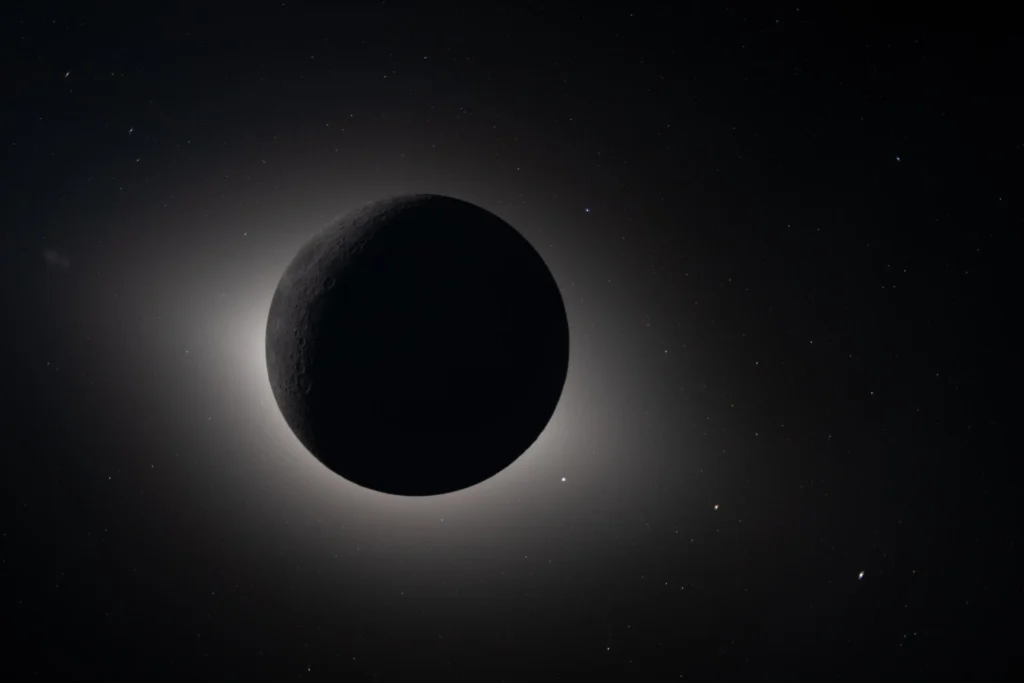
4) The Eclipse Frame
Taken during a 57-minute solar eclipse behind the Moon, this image shows Earth glowing at the edge of lunar darkness alongside the solar corona and the pinpoints of Venus, Mars, Saturn, and Mercury simultaneously visible.
5) The Earthshine Shot
Taken while the Moon’s far side was not in direct sunlight, this frame shows the lunar surface faintly lit by light reflected back from Earth, a phenomenon called Earthshine with impact craters softly visible in the dim glow.
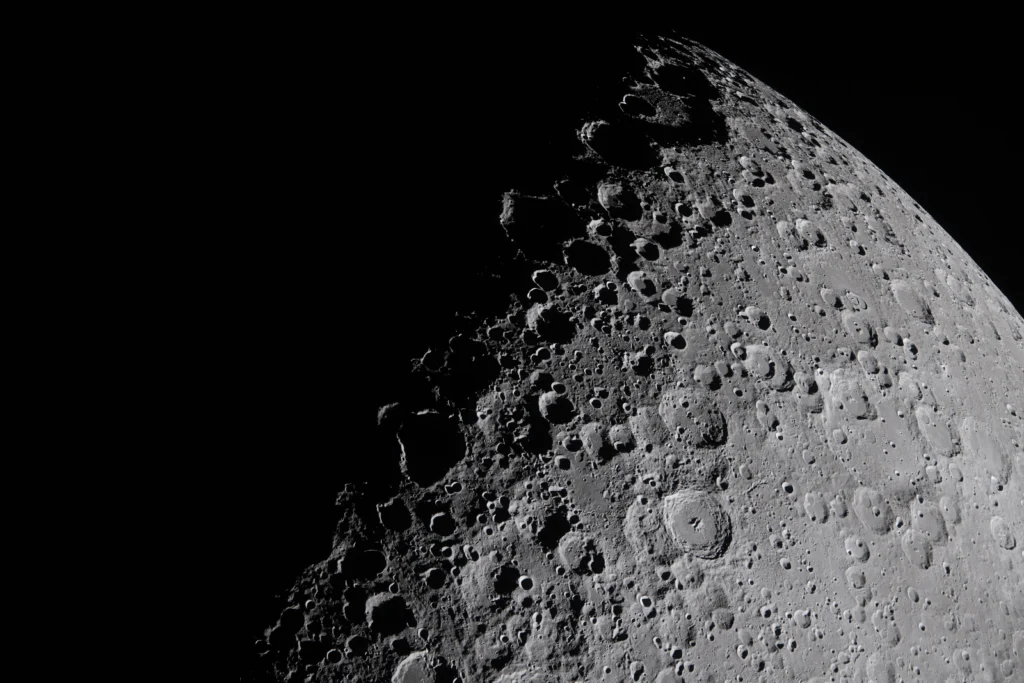
These are the Artemis II Earth Day images that NASA says it hopes will define this generation’s relationship with our home planet.
NASA’s Orion Heat Shield: The Invisible Challenge Behind the Mission
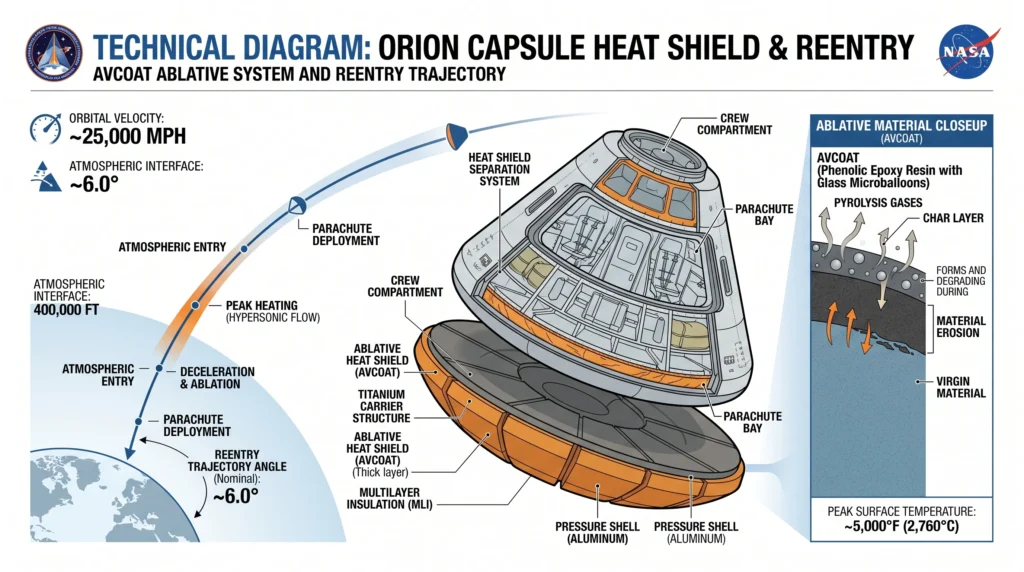
The Artemis II Earth Day images captured something beautiful. Behind the scenes, NASA was managing something consequential.
Following the uncrewed Artemis I mission, engineers discovered unexpected erosion in Orion’s AVCOAT heat shield, a process called “char loss” and “spalling” caused by trapped gases cracking the material during reentry. Rather than redesigning the shield and delaying the mission, NASA chose a modified “steeper direct entry trajectory” that reduced the time the capsule spent in peak thermal conditions.
The decision worked. Artemis II splashed down safely on April 11, 2026. But the debate it sparked within the agency documented in partially redacted Inspector General reports reflects the eternal balance between mission momentum and engineering safety margins. Artemis III, the planned lunar landing mission, will require a fully certified solution before launch.
Artemis II vs. Apollo’s Earthrise: A Visual Legacy
The Earthrise photograph from Apollo 8 in 1968 is frequently cited as one of the most influential images ever taken a picture that helped launch the modern environmental movement and changed how humanity understood its place in the universe.
The Artemis II Earth Day images arrive 58 years later, but with a different kind of weight. They are not the first time humans have seen Earth from lunar distance. They are the return proof that the silence of deep space, unheard since December 1972, can be broken again.
FAQs
NASA officially released the Artemis II Earth Day images on April 22, 2026, timed to coincide with Earth Day. The mission itself launched April 1 and concluded with splashdown on April 11, 2026.
The most distant images were captured at approximately 252,756 miles (406,771 km) from Earth surpassing the previous human distance record set by Apollo 13 in 1970.
The images were taken by the Artemis II crew: Commander Reid Wiseman, Pilot Victor Glover, Mission Specialist Christina Koch, and Canadian astronaut Jeremy Hansen.