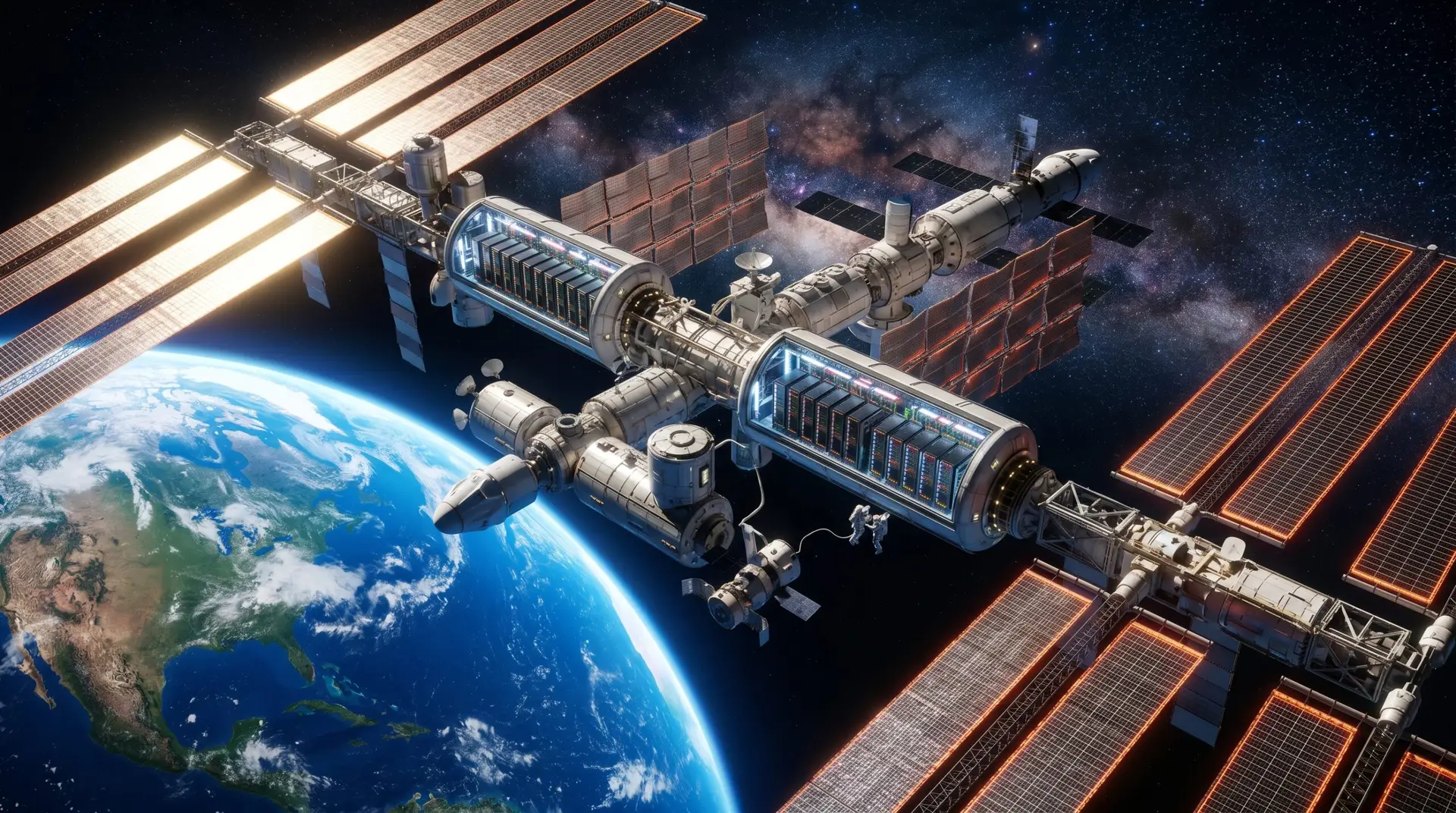
Space-based data centers are no longer a concept confined to science-fiction pitch decks. In 2026, they represent the most credible answer to one of humanity’s most urgent engineering dilemmas: how do we power an AI revolution that is consuming electricity and water faster than the planet can supply them? The physical limits of Earth like overloaded power grids, water-intensive cooling, and saturated real estate in tech corridors have forced the world’s most ambitious technologists to look upward.
What they are building in Low Earth Orbit (LEO) is not just infrastructure; it is a new layer of technological self-reliance for nations and corporations alike.
Why Space-Based Data Centers Are Solving AI’s Biggest Crisis?
The artificial intelligence boom has triggered a resource crisis that no amount of terrestrial engineering can fully solve. Hyperscale data centers now consume entire rivers for cooling and can take up to a decade to receive grid connection approvals. Startups and tech giants alike are pivoting to orbital compute as the ultimate carbon-neutral solution.
Starcloud backed by Nvidia and formerly known as Lumen Orbit has argued compellingly in published research that orbital data centers eliminate both problems simultaneously. Space’s naturally freezing temperatures remove the need for water-intensive cooling systems, while satellites in constant sunlight receive power densities that dwarf anything achievable on the ground. Starcloud’s $170 million funding round in early 2026 confirmed that investors agree: the economics of orbital compute are becoming real.
SpaceX and Tesla jointly unveiled “Project Terafab” in March 2026, a terrestrial-to-orbital manufacturing pipeline designed to build a 1-terawatt orbital compute cluster. Meanwhile, Kepler Communications partnered with Sophia Space to test GPU-equipped satellites running proprietary operating systems, a critical milestone in orbital data centers AI maturity. The verdict is clear: the migration of AI processing to orbit is not a distant possibility. It is an active construction project.
India’s Semiconductor Ecosystem Fuels the Orbital Revolution
No nation stands to benefit more from the rise of space-based data centers than India and no nation is better positioned to supply the silicon that will power them. India’s semiconductor ecosystem expansion is transforming the country from a design talent pool into a full-spectrum hardware manufacturing hub with extraordinary speed.
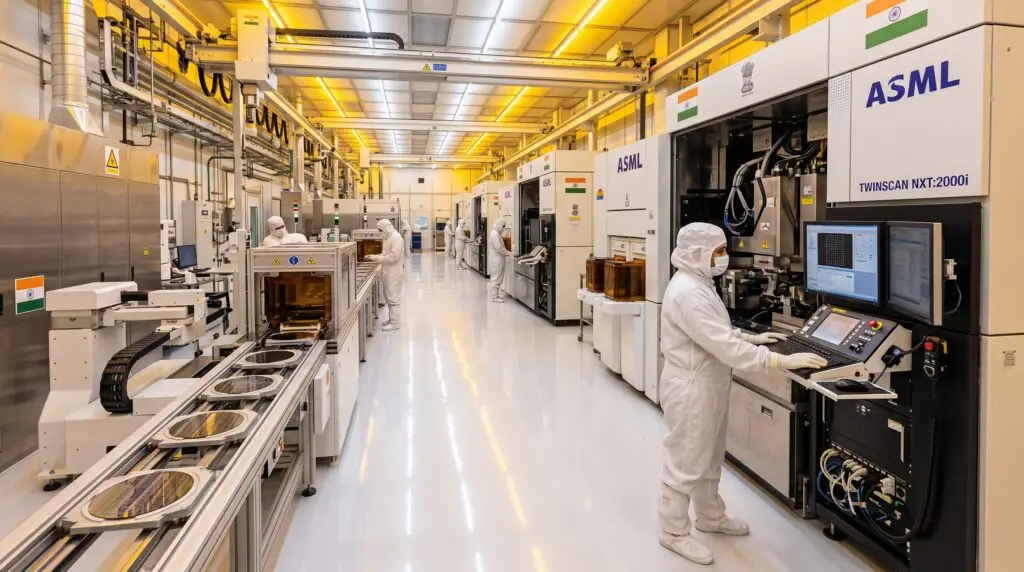
The Rs. 76,000 crore Semcon India Programme has unlocked two landmark facilities. In Dholera, Gujarat, the Tata-PSMC partnership uses advanced ASML lithographic tools in a Rs. 91,000 crore fab to produce high-end circuitry. In Assam, a Rs. 27,120 crore Tata investment in semiconductor packaging using indigenous technologies has redefined the economic identity of India’s Northeast. These are not just factories; they are India semiconductor fabrication hubs that insulate a critical supply chain from geopolitical disruption.
India’s semiconductor incentives are also drawing international partnerships that were unthinkable a decade ago. With 20% of the world’s semiconductor design engineers already operating from Indian cities, the country is now converting intellectual capital into physical hardware at scale. This positions India as an indispensable partner for any nation or private company building carbon-neutral orbital infrastructure.
Humanoid Robot Half Marathon: Chinese Robot Smashes Record in 50 Minutes
Reusable Rocket Technology and Air Traffic Regulatory Hurdles
Building space-based data centers requires launching thousands of tons of hardware into orbit. That demand is driving a fierce race in reusable rocket technology but it is also creating a friction point that no one fully anticipated: the colonization of our own atmosphere.
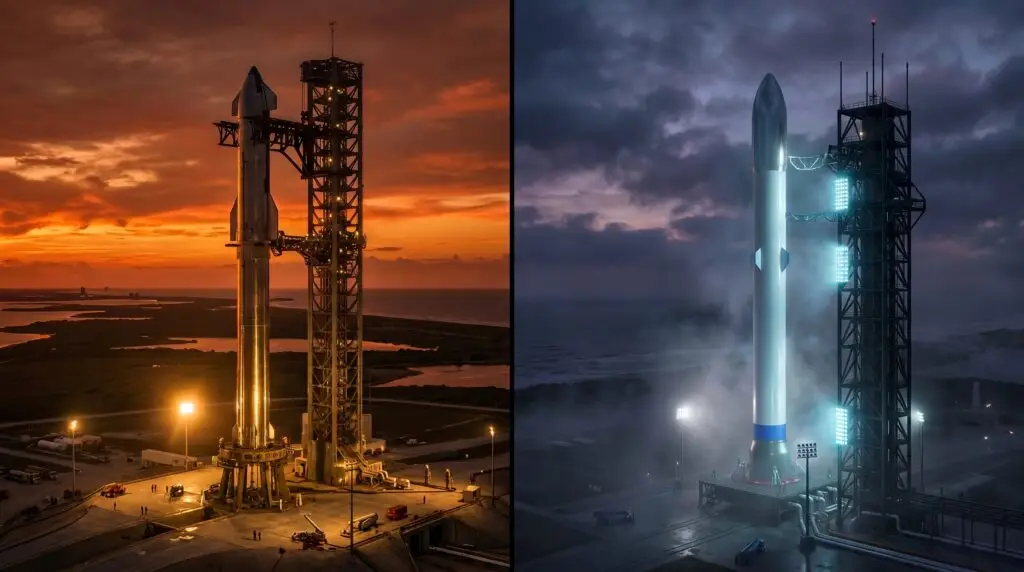
The private space sector high-cadence era has arrived. SpaceX is targeting 180 to 200 launches in 2026, with ambitions to drive Starship’s launch cost to $100 per kilogram to LEO. Rocket Lab’s “Neutron” rocket, priced at $50–55 million per mission with a 13,000 kg capacity, is carving out a credible medium-lift niche. Blue Origin’s successful New Glenn orbital booster landing has restored competitive pressure on the entire market.
However, the volume of launches is colliding with the world’s busiest air corridors. In Florida alone, Starship operations could disrupt up to 2.3 million commercial passengers annually, with rerouting costs estimated at $80–350 million per year. On January 8, 2026, the FAA issued a formal Safety Alert for Operators (SAFO), warning pilots to account for increasing launch disruptions and potential debris from anomalies.
The reusable rocket technology air traffic challenges are now a regulatory and economic reality that must be solved in parallel with the engineering of orbital infrastructure itself.
SpaceX and Blue Origin: The Race for Heavy-Lift Dominance
SpaceX and Blue Origin Battle for Heavy-Lift and Lunar Dominance!
The competitive calculus of the launch industry shifted dramatically when Blue Origin successfully landed an orbital-class booster in 2025. That milestone validated New Glenn as a credible heavy-lift vehicle and allowed Blue Origin to propose its Blue Moon Mark 2 lander for NASA’s Artemis III mission, a direct challenge to SpaceX’s Starship for the first crewed lunar landing since Apollo.
SpaceX, however, continues to set a pace that competitors struggle to match. The Falcon 9 family remains the world’s dominant workhorse, while Starship V3 represents the largest rocket ever flown reliably. For the orbital data center ecosystem, the SpaceX Blue Origin heavy-lift competition is enormously beneficial: it drives down costs, increases launch frequency, and accelerates the timeline for deploying large-scale infrastructure in LEO.
What the competition ultimately resolves is the question of sovereign security. Governments are no longer content being passengers on another nation’s rockets. Countries across Asia, the Middle East, and Europe are actively funding dedicated national access to orbit because whoever controls the launch cadence controls access to the compute clusters that will define the next era of AI power.
The Road Ahead: Sovereign Compute in the Stars
The convergence of India’s semiconductor push, the private space sector’s high-cadence launch era, and the AI industry’s insatiable compute hunger has made space-based data centers the most consequential infrastructure investment of the 2020s. By the end of this decade, orbital compute clusters will likely process a significant share of the world’s most demanding AI workloads and the nations that control the silicon, the rockets, and the orbital slots will exercise a form of technological self-reliance orbital data centers that redefines geopolitical power.
The question is no longer whether space-based data centers will become mainstream. The question is who will own them, who will regulate them, and who will be left dependent on another nation’s orbital infrastructure. The answer will be written by the decisions made today in semiconductor fabs in Dholera, on launch pads in Florida, and in orbit around our increasingly crowded planet.
FAQ’s
Space-based data centers are computing facilities deployed in orbit typically Low Earth Orbit that use solar energy for power and the cold vacuum of space for cooling, enabling carbon-neutral AI processing with minimal water consumption.
Terrestrial data centers face severe constraints including power grid limitations, water usage for cooling, and land scarcity. Orbital data centers eliminate these bottlenecks by accessing perpetual solar energy and natural radiative cooling in space.
Regulatory and air traffic hurdles are currently the most immediate challenge. The high cadence of rocket launches needed to build orbital infrastructure is creating airspace conflicts and safety concerns that the FAA and international aviation bodies are only beginning to address.