The Strait of Hormuz blockade has reshaped global economics almost overnight. Since mid-March 2026, escalating Iran conflict has severed the world’s most critical energy corridor, triggering oil price surges, runaway inflation, and recession fears across three continents. What began as a geopolitical flashpoint has rapidly become the defining economic shock of this decade.
This article unpacks how the blockade unfolded, why inflation is now “sticky,” and what it means for your energy bills, investments, and the global economy through 2026 and beyond. Why due to two countries in the world, Everyone is suffering.
What Is the Strait of Hormuz Blockade and Why It Matters?
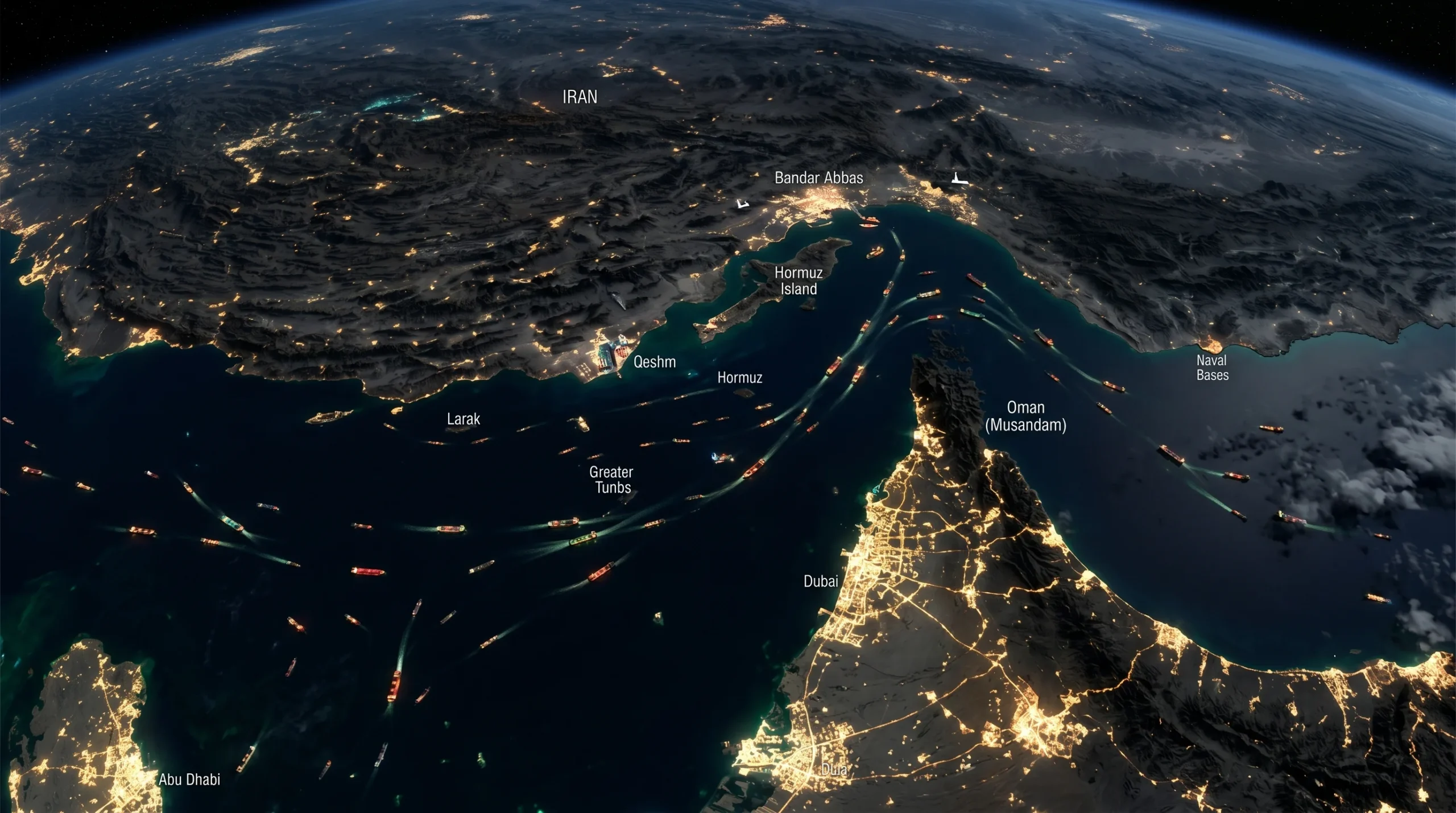
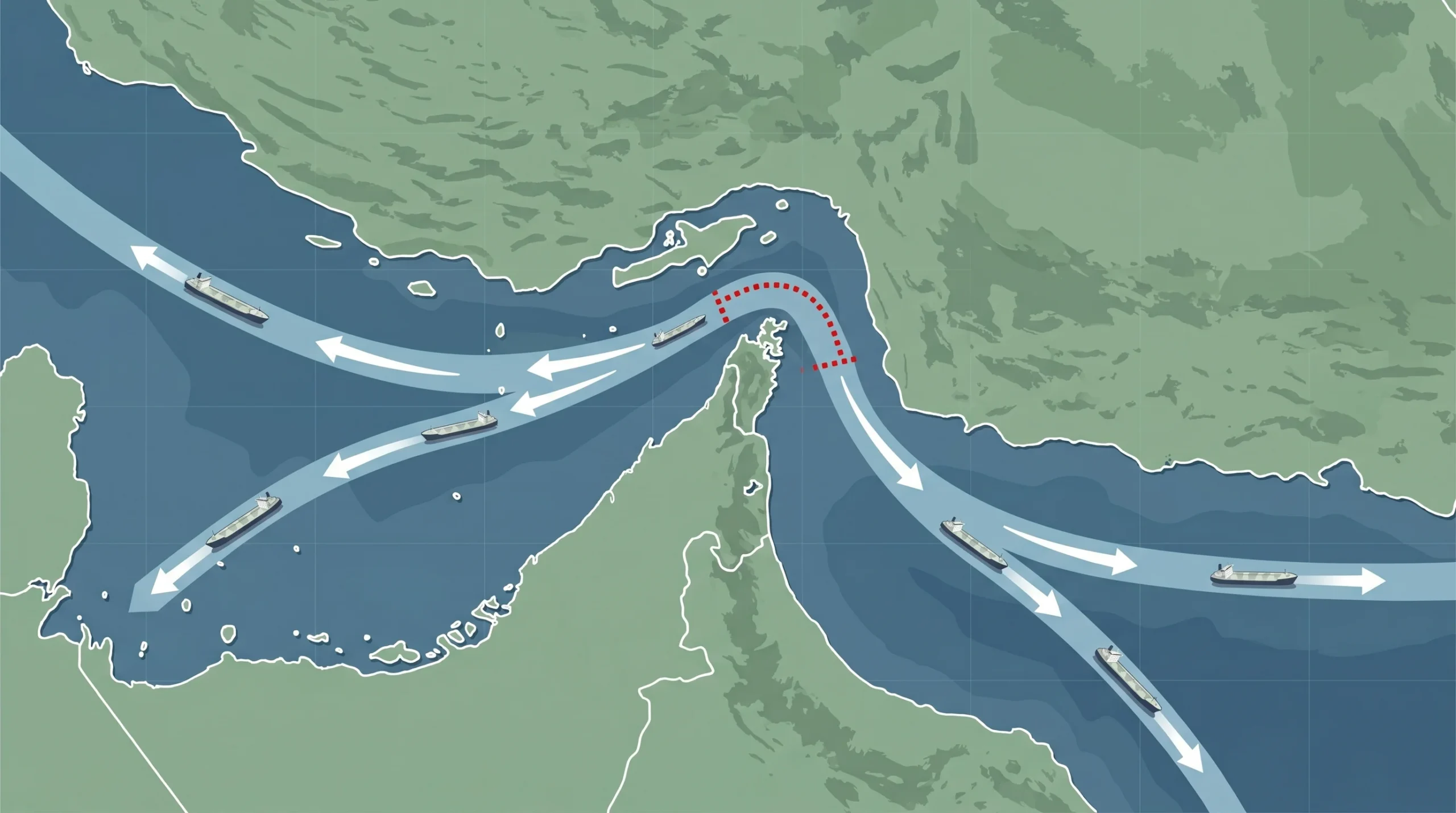
The Strait of Hormuz is a narrow 33-kilometre waterway between Oman and Iran. Roughly 20% of the world’s oil and a significant share of liquefied natural gas (LNG) pass through it daily. No other single chokepoint carries this volume of energy.
When Iran escalated military operations in early March 2026 as USA and Israel carried out attacks, the Strait of Hormuz blockade effectively halted tanker traffic from the UAE, Saudi Arabia, Kuwait, and Iraq simultaneously. The International Energy Agency (IEA) called it the “largest supply disruption in the history of the global oil market,” surpassing even the 1970s oil embargo in both speed and scale.
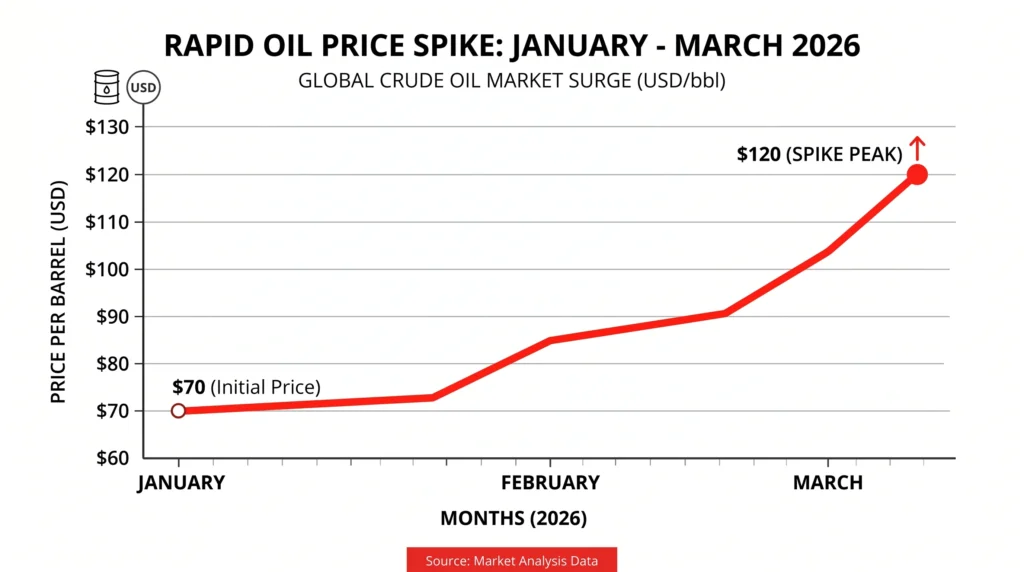
Within 72 hours of the blockade tightening, Brent Crude surged past $120 per barrel. US gasoline hit a national average of $4.00 per gallon, with California exceeding $5.00. LNG spot prices in Asia spiked 140% following strikes on Qatar’s Ras Laffan facility.
How the Strait of Hormuz Blockade Is Fuelling the Global Energy Crisis?
The Strait of Hormuz blockade energy crisis is not simply about fuel. It has exposed the extraordinary fragility of just-in-time global supply chains.
Qatar produces 35% of the world’s helium supply. With shipments halted, helium prices jumped from $300 to $900 per thousand cubic feet directly threatening semiconductor manufacturing, which depends on helium to cool silicon wafers during production. This is a supply chain crisis embedded inside an energy crisis. I want to mention this war is not affecting USA because they already looted Venezuela.
Commodity markets have been equally destabilised. Tungsten prices surged over 50% in March 2026. Copper processing in Chile slowed after Gulf-exported sulfuric acid which accounts for 45% of global supply dried up. Fertiliser costs doubled, with urea and sulfur also primarily transiting the Strait, pushing nitrogen fertiliser prices to levels last seen during the 2022 food crisis.
The blockade has also triggered an aviation collapse. Airspace closures have caused over 4,000 daily flight cancellations, ending the Gulf’s role as a global transit hub and stranding hundreds of thousands of travellers.
Sticky Inflation and Delayed Rate Cuts: Impact on Fed, ECB, and BOE
Central banks entered 2026 cautiously optimistic. Rate cut cycles were expected across the Federal Reserve, European Central Bank, and Bank of England. The Strait of Hormuz blockade has shattered those projections entirely.
The energy shock has created “sticky inflation”, a condition where price rises, once embedded, are difficult to reverse. Inflation readings across G7 economies have rebounded to 3–5%, effectively making rate cuts politically and economically impossible. The Hormuz blockade delaying rate cuts is now the consensus view among economists, with easing now pushed to 2027 at the earliest.
Federal Reserve Chair Kevin Warsh faces mounting political pressure from the Trump administration, which has labelled potential rate hikes “unpatriotic.” Yet with core inflation refusing to fall, the Fed has almost no room to stimulate growth. The ECB raised its 2026 inflation forecast on March 19 while simultaneously slashing GDP growth projections, a textbook stagflationary trap.
For the BOE, the picture is equally bleak. UK energy import costs have spiked sharply, and the pound faces pressure as investors reassess Britain’s exposure to global energy markets. A “soft landing” has been replaced by a desperate effort to prevent a currency crisis.
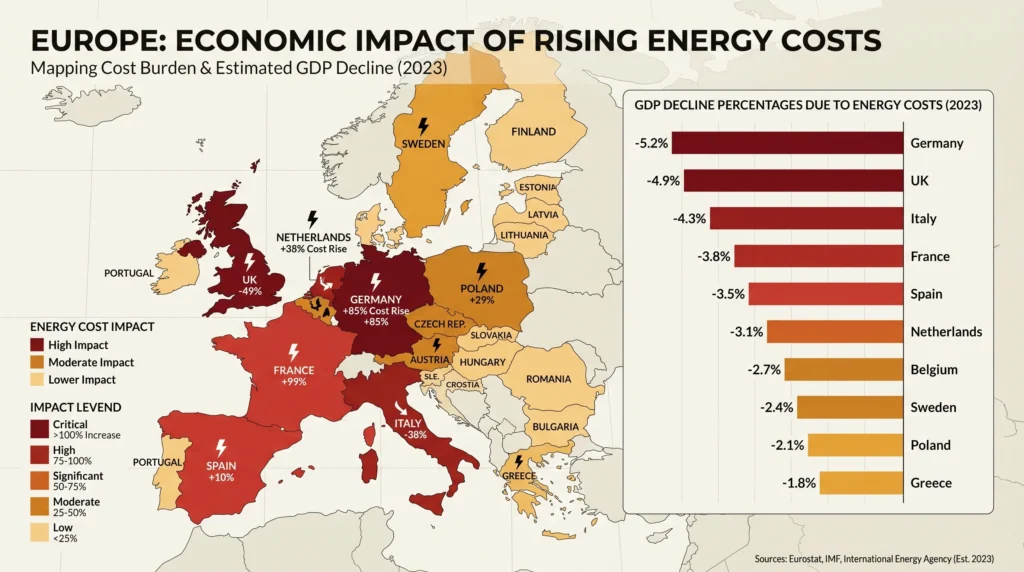
Europe’s €6 Billion Energy Bill and Global GDP Downgrades
The Strait of Hormuz blockade Europe energy costs are rising at a rate that threatens the continent’s industrial base. Dutch TTF gas benchmark prices have doubled to over €60/MWh, hitting at a time when European gas storage levels had already fallen to just 30% following a harsh winter.
Italy faces the largest financial exposure among European nations at $9.8 billion, driven by its heavy reliance on Qatari LNG. Chemical and steel manufacturers across the EU have imposed emergency surcharges of up to 30% to offset surging electricity costs. Germany and Italy are both projected to enter technical recession before year-end.
US Seizes Iranian Cargo Ship Touska! What Actually Happened?
The prospect of permanent deindustrialisation long dismissed as alarmist is now a live policy concern in Brussels and Westminster. Energy-intensive industries, unable to compete with rivals operating in energy-abundant regions, face permanent relocation or closure. It’s time for Europe to back off from USA and Produce all things on their own.
Globally, GDP forecasts for 2026 have been revised downward to approximately 2.4%, with further cuts expected if the Strait of Hormuz blockade extends beyond Q2. The Cape of Good Hope shipping diversion adding 7–10 days and significant cost to every voyage is now the operational baseline for global trade.
The Humanitarian Cost: Water, Food, and the Expat Exodus!
Beyond financial markets, the Strait of Hormuz blockade has created a humanitarian emergency in the Gulf itself. Iranian strikes on desalination plants have disrupted the supply of potable water to Qatar and Kuwait, where desalination provides 99% of drinking water. Food security has deteriorated sharply, with consumer prices for staples rising 40–120% as 80% of the GCC’s caloric intake normally transits the Strait.
The human exodus is accelerating. Over 220,000 Indian nationals have already been repatriated, bringing their capital and skills home. This “Returnee Trend” has sparked a 14% growth spike in secondary real estate markets across Tier-2 and Tier-3 Indian cities an unexpected economic reversal for the Gulf that took decades to build.
What Comes Next?
The 2026 Strait of Hormuz blockade is not a temporary shock that markets will absorb and forget. It has exposed fundamental vulnerabilities in globalised created by western System, just-in-time energy systems. Supply chain strategists, central bankers, and governments are now rethinking decades of assumptions about maritime security and energy dependency.
Renewable energy investment is expected to accelerate sharply, not out of climate ideology but out of raw strategic necessity. Nations that relied on Gulf energy imports are actively seeking domestic or regional alternatives as these Gulf Countries can’t Protect themselves and too much dependence on USA show them they are not Allies. The blockade has done what years of climate summits could not: made energy self-sufficiency an urgent national security priority.
Trust in these maritime chokepoints, once taken for granted, will not return quickly. The Strait of Hormuz blockade of 2026 has permanently shifted how the world maps risk, prices energy, and builds supply chains.
FAQ’s
The Strait of Hormuz blockade refers to the disruption of oil and LNG tanker traffic through the 33-kilometre waterway between Iran and Oman following Iran’s escalatory military actions in March 2026. It is the largest energy supply disruption in recorded history.
The blockade caused Brent Crude to surge past $120 per barrel almost immediately. US average gasoline prices hit $4.00 per gallon nationally, with California surpassing $5.00. LNG spot prices in Asia rose 140% following strikes on Qatar’s Ras Laffan facility.
Italy holds the largest financial exposure at $9.8 billion due to its reliance on Qatari LNG. Germany is most exposed industrially. Both are projected to enter technical recession by late 2026 if the blockade persists.